

Baisakhi is one of the most significant celebrations in the Punjabi cultural calendar. Marking the harvest season and the formation of the Khalsa in 1699, the festival carries deep historical and social meaning. Families gather for community events, traditional dances and festive meals, while clothing and jewellery reflect the pride of heritage.
Jewellery has always played a central role in Punjabi festive dressing. Carefully selected ornaments complement vibrant textiles, embroidered suits and traditional silhouettes worn during the celebration. In recent years, baisakhi jewellery for women has evolved to balance heritage design with contemporary styling preferences. Classic motifs remain central, while lighter constructions and versatile sets allow jewellery to be worn across multiple occasions.
For Baisakhi 2026, the emphasis continues to be on pieces that highlight craftsmanship without overwhelming the overall look. From pearl chokers to heirloom inspired hair accessories, traditional jewellery for Baisakhi focuses on refined detailing, cultural symbolism and thoughtful styling.
The Cultural Importance of Jewellery During Baisakhi
Punjabi jewellery traditions are closely tied to celebration, identity and community heritage. Pieces worn during festive gatherings often represent continuity across generations. Mothers pass down ornaments to daughters, while new jewellery marks milestones such as weddings, engagements and cultural festivals.
During Baisakhi celebrations, jewellery serves several purposes:
-
Completing the festive ensemble: Jewellery frames the outfit and enhances colour and embroidery.
-
Reflecting Punjabi heritage: Motifs, pearls and carved gold designs represent long-standing regional craftsmanship.
-
Balancing vibrant clothing: Festive suits and lehengas often feature strong colours, making carefully chosen jewellery essential for visual harmony.
-
Creating ceremonial presence: Jewellery adds structure and definition to the overall presentation.
These factors explain why baisakhi jewellery for women remains an essential element of festive preparation every year.
Key Characteristics of Traditional Punjabi Jewellery
When selecting traditional jewellery for Baisakhi, certain design elements remain particularly important.
-
Pearl Embellishments
Pearls have historically been associated with royal jewellery across North India. Their soft lustre complements vibrant fabrics without appearing excessive, making them ideal for festive events.
-
Carved Gold Motifs
Traditional Punjabi ornaments often include engraved floral or geometric motifs. These patterns reflect regional craftsmanship and bring visual depth to necklaces, earrings and tikka designs.
-
Statement Yet Balanced Design
While Punjabi jewellery celebrates detail and richness, the most effective pieces maintain proportion. The goal is to highlight craftsmanship without overshadowing the outfit.
-
Movement and Ornamentation
Dangling pearl drops, jhumka elements and chain accents create movement that enhances festive styling, especially during celebrations such as gidda and bhangra.
Heritage Panjab Jewellery Recommendations
The following pieces highlight how baisakhi jewellery for women can combine traditional aesthetics with versatile styling.
1. Rida Pearl Choker Set with Tikka
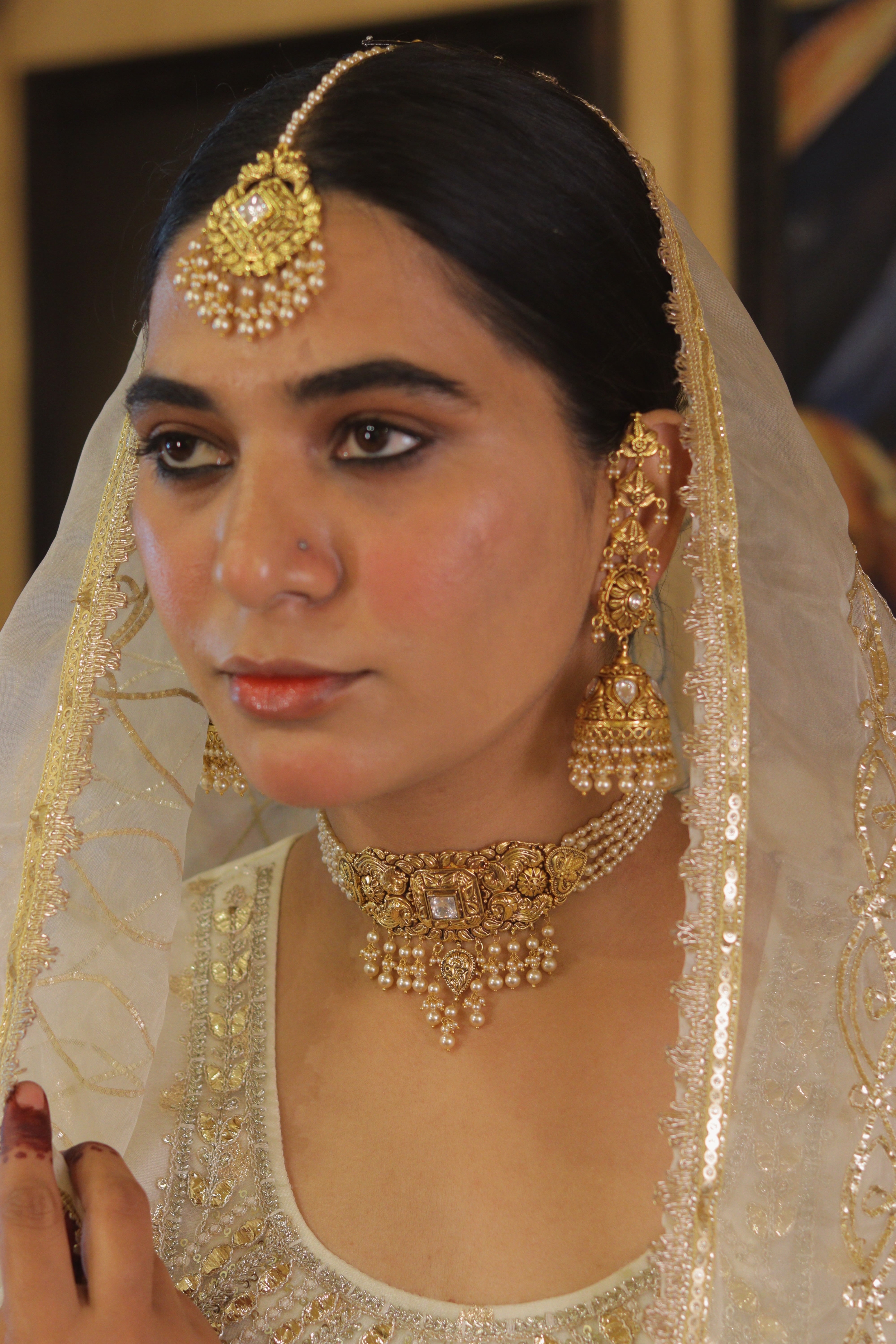
Rida Pearl Choker Set with Tikka is a regal blend of heritage craft and luminous detail. The gold toned choker features carved motifs, a central stone, and cascading pearl drops. Paired with ornate jhumka earrings and a statement maang tikka, the set frames the face beautifully, making it ideal for bridal ensembles and grand festive occasions.
Styling Perspective
Choker sets remain an essential component of traditional jewellery for Baisakhi because they sit close to the neckline, complementing embroidered Punjabi suits and festive dupattas.
For Baisakhi gatherings:
-
Pair the set with phulkari dupattas or embroidered kurta sets.
-
Keep additional jewellery minimal to maintain balance.
-
Style hair in a classic bun or braid to highlight the tikka.
The structure of the choker ensures that the jewellery becomes a focal element while maintaining cultural authenticity.
2. Kinza Pearl Set
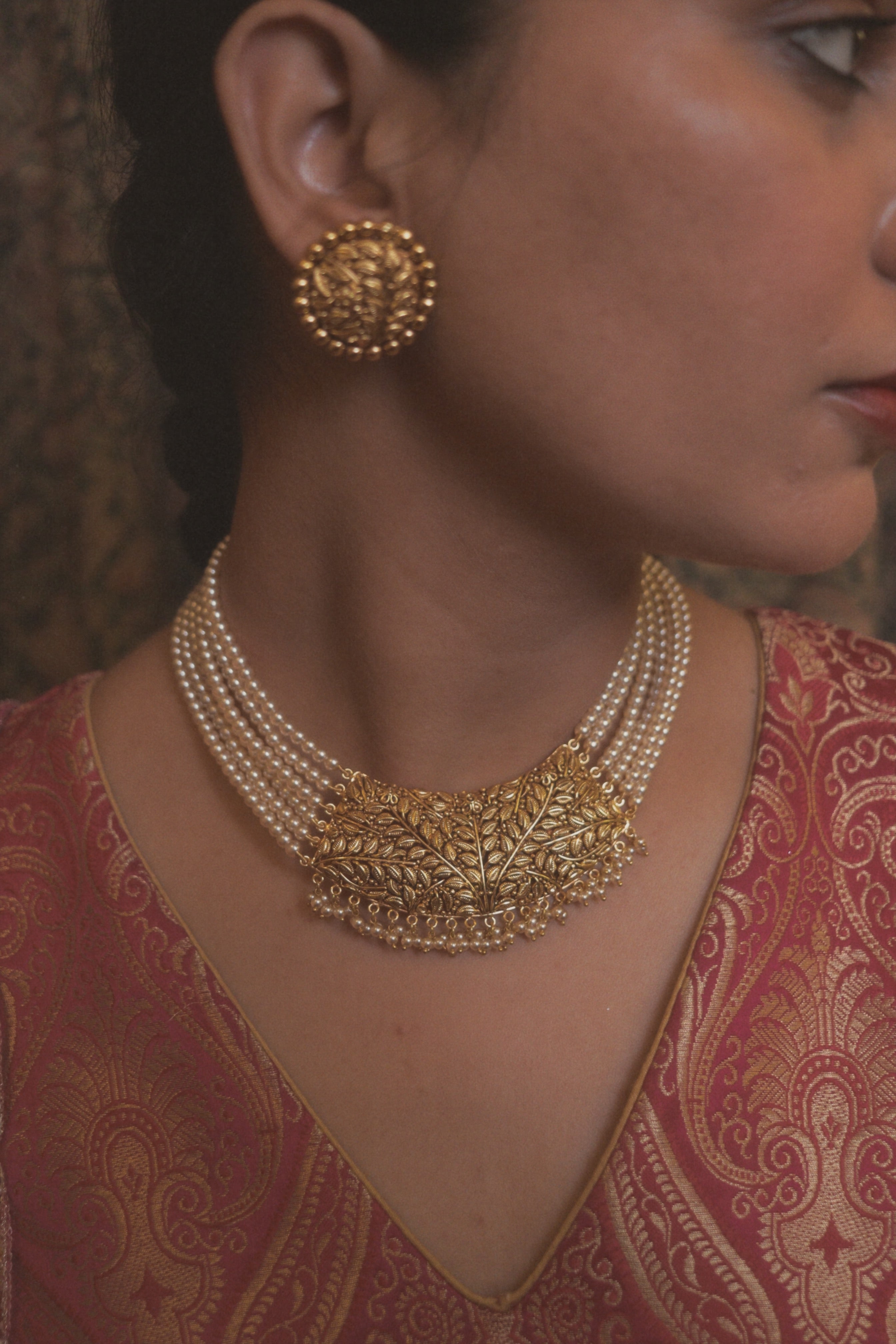
Kinza Pearl Set brings together delicate elegance and intricate gold craftsmanship. Layers of fine pearls lead to an ornate leaf inspired gold centerpiece, detailed with traditional carving and subtle pearl drops. Paired with matching stud earrings, the set offers a refined yet statement look, perfect for weddings, festive gatherings and timeless traditional styling.
Styling Perspective
Among baisakhi jewellery for women, layered pearl necklaces offer versatility. They pair well with both minimal and elaborate outfits.
Recommended styling approaches include:
-
Wearing the set with pastel or ivory Punjabi suits.
-
Combining it with lightweight dupattas for daytime celebrations.
-
Allowing the necklace to stand out by limiting additional neck jewellery.
The Kinza set reflects how traditional jewellery for Baisakhi can remain elegant without appearing overly ornate.
3. Rabnoor Waliyaan
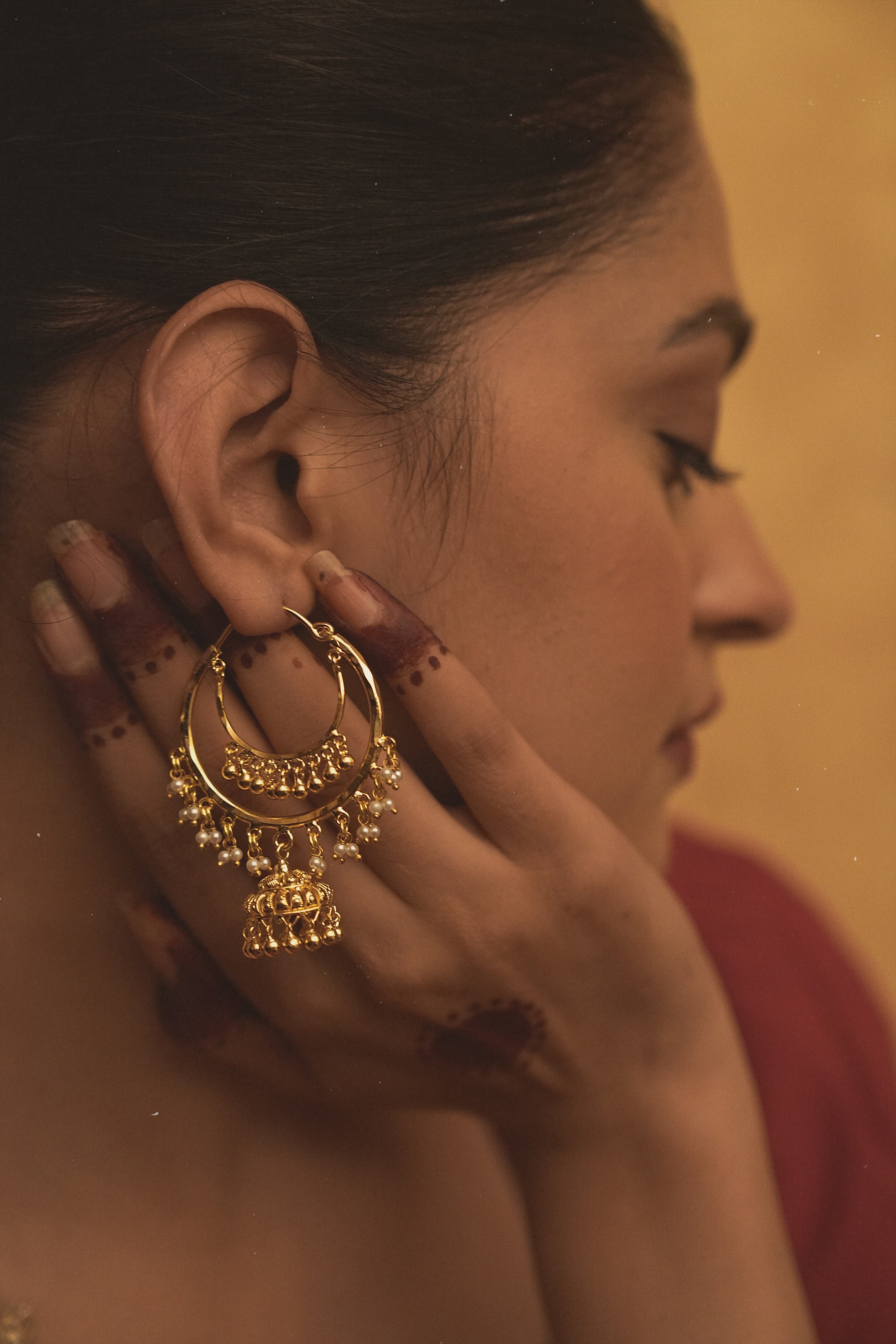
Rabnoor Waliyaan earrings showcase a graceful blend of classic hoop design and traditional detailing. The gold toned hoops are adorned with delicate bead accents and tiny pearl drops, finished with a miniature jhumka charm that sways gently. Elegant yet festive, these earrings add movement, warmth and a touch of heritage to celebratory looks.
Styling Perspective
Statement earrings remain a staple in baisakhi jewellery for women because they complement the movement of traditional dance and celebration.
These earrings work particularly well with:
-
Patiala suits and embroidered kurtas
-
Braided hairstyles or side parted waves
-
Minimal neckpieces or simple chokers
Their design reflects the influence of traditional Punjabi waliyaan while remaining adaptable to contemporary festive dressing.
4. Mehar Stud & Tikka
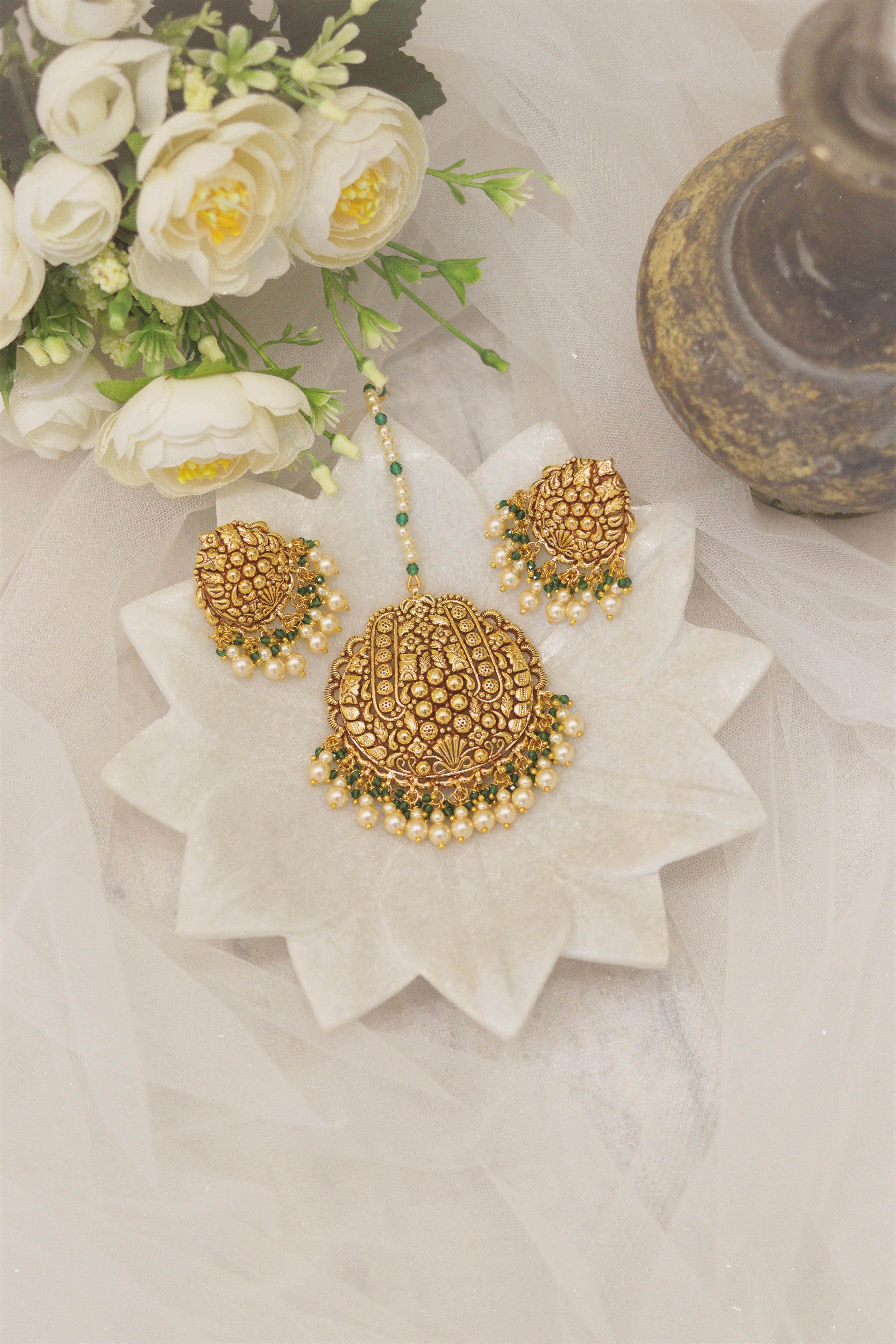
Mehar Stud & Tikka set celebrates traditional artistry with rich gold toned detailing and timeless motifs. The intricately carved tikka features a bold pendant adorned with delicate pearl and green bead drops. Paired with matching statement studs, the set creates a regal festive accent perfect for weddings, cultural celebrations and classic ethnic styling.
Styling Perspective
Maang tikkas are closely associated with ceremonial dressing in Punjab. For Baisakhi celebrations, they provide a structured focal point that enhances facial framing.
Styling recommendations include:
-
Wearing the set with centre parted hairstyles
-
Pairing it with embroidered dupattas draped over the head
-
Avoiding oversized necklaces when the tikka is prominent
The Mehar set illustrates how traditional jewellery for Baisakhi often focuses on symmetry and detail rather than size alone.
5. Virsa Hair Clips Pair
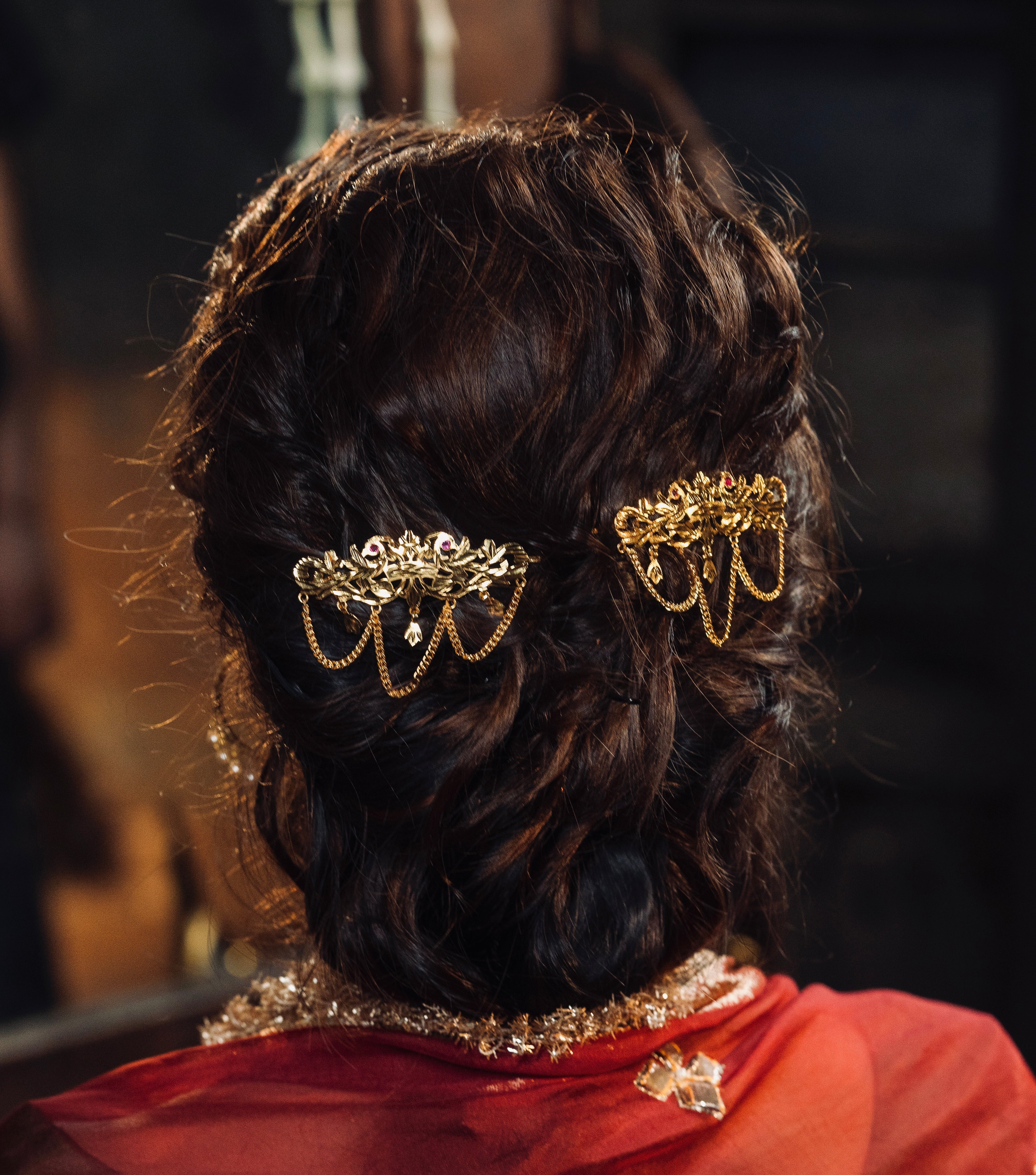
Virsa Hair Clips Pair blends vintage elegance with intricate craftsmanship. Designed with detailed floral motifs and delicate gold chains that drape gracefully, these clips add movement and charm to any hairstyle. Accented with subtle stones, they bring a regal touch to braids, buns or loose waves perfect for weddings, festive occasions and statement styling.
Styling Perspective
Hair accessories have become increasingly prominent within baisakhi jewellery for women collections. They provide decorative structure without requiring additional necklaces or earrings.
These clips work effectively with:
-
Braided hairstyles commonly worn with Punjabi suits
-
Low buns for formal celebrations
-
Half up styles for daytime festivities
By introducing chain detailing and subtle embellishment, they highlight the evolving approach to traditional jewellery for Baisakhi.
How to Choose the Right Jewellery for Baisakhi
Selecting festive jewellery requires attention to balance and proportion. While Punjabi celebrations encourage vibrant dressing, careful styling ensures the overall appearance remains refined.
-
Consider Outfit Colour
Bright textiles often benefit from neutral jewellery tones such as pearls or gold.
-
Prioritise Craftsmanship
Hand carved motifs, pearl accents and heritage patterns enhance authenticity.
-
Avoid Excessive Layering
Choosing one focal piece such as a choker or statement earrings prevents visual overload.
-
Coordinate Hair and Jewellery
Hair styling plays a significant role in highlighting tikka designs and earrings.
By focusing on these elements, baisakhi jewellery for women becomes a natural extension of traditional festive dressing.
Conclusion
Baisakhi jewellery continues to represent heritage, craftsmanship and festive pride. When thoughtfully chosen, each piece becomes an extension of Punjabi identity and celebration an ethos carefully preserved through the collections at Heritage Panjab.
FAQs
1. What jewellery is traditionally worn on Baisakhi?
Traditional jewellery for Baisakhi often includes pearl chokers, jhumka earrings, maang tikkas and gold toned necklaces. These pieces complement vibrant Punjabi suits and lehengas while reflecting heritage craftsmanship and festive cultural traditions.
2. What type of earrings are best for Baisakhi outfits?
Jhumkas, waliyaan hoops and pearl drop earrings work well with Baisakhi outfits. These designs provide movement and detail while balancing embroidered suits, phulkari dupattas and vibrant festive clothing.
3. Can pearl jewellery be worn for Baisakhi celebrations?
Yes, pearl jewellery is widely worn during Baisakhi. Pearl chokers, layered necklaces and earrings complement traditional Punjabi outfits while maintaining elegance and balance alongside bright festive textiles and embroidery.
4. How do I choose jewellery that matches a Punjabi suit?
Select jewellery that complements the neckline, embroidery and colour of the outfit. Chokers work well with deep necklines, while statement earrings suit higher neck designs commonly found in Punjabi suits.
5. Are hair accessories part of Baisakhi jewellery styling?
Yes. Hair accessories such as decorative clips, chain ornaments and traditional tikkas enhance festive hairstyles. They provide structure and detail while complementing braids, buns and loose styles worn during celebrations.
